Use This Page For
Use this hub when the real task is deciding which reconstitution page answers your question fastest: solvent selection, U-100 unit interpretation, GLP-1 example math, or a full sterile workflow refresher.
This cluster is the routing layer for reconstitution questions: solvent choice, sterile workflow, concentration math, syringe readability, and the evidence boundaries that should stay visible any time someone turns vial powder into a usable solution.
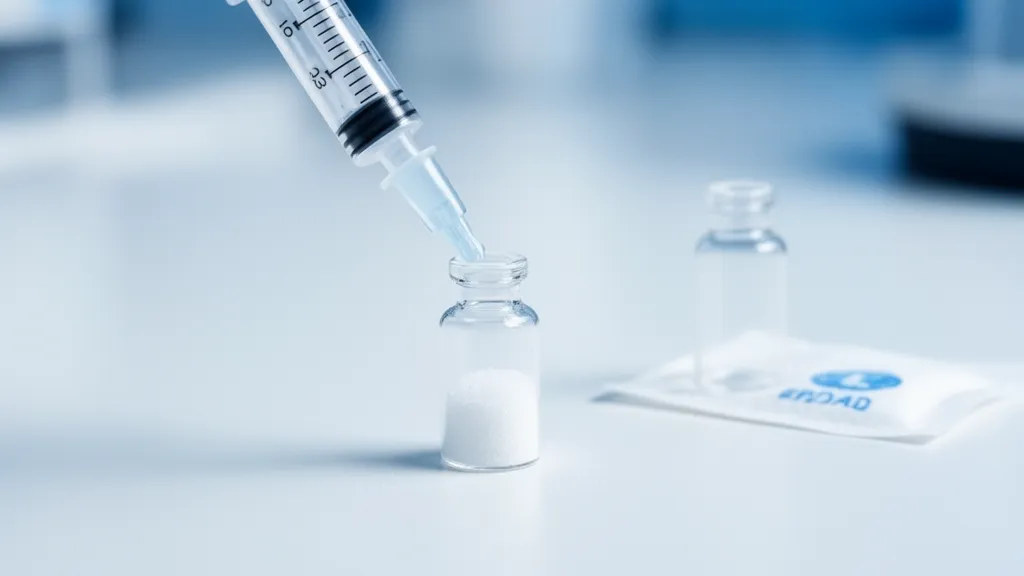
Use this hub when the real task is deciding which reconstitution page answers your question fastest: solvent selection, U-100 unit interpretation, GLP-1 example math, or a full sterile workflow refresher.
Reconstitution is where concentration decisions and contamination risk start. If the early workflow is vague, every later unit conversion and storage estimate becomes less trustworthy.
This cluster organizes workflow content. It does not claim that one solvent, one dilution, or one room-temperature window is universally correct for every peptide or formulation.
Operational reading: Use this hub when the real task is deciding which reconstitution page answers your question fastest: solvent selection, U-100 unit interpretation, GLP-1 example math, or a full sterile workflow refresher. Reconstitution is where concentration decisions and contamination risk start. If the early workflow is vague, every later unit conversion and storage estimate becomes less trustworthy.
What should happen after this page: The right next step after reading a guide like this is usually to move into a narrower tool, chart, or peptide-specific page with the variables kept explicit. That keeps one guide-level rule from being stretched across a different vial size, solvent choice, route, or formulation than the page actually supports.
Common mistake to avoid: The most common failure mode is not arithmetic. It is transferring one clean-looking answer into a different setup without rechecking concentration, labeling, storage context, or the evidence tier behind the claim. This cluster organizes workflow content. It does not claim that one solvent, one dilution, or one room-temperature window is universally correct for every peptide or formulation.
A guide should narrow the decision, not create fake certainty. When source-backed information ends, the responsible move is to label the gap, keep the assumption small, and avoid turning an estimate into a protocol.
In practice, the strongest use of a guide page is to filter out bad assumptions before you move to a narrower decision. That means checking whether the recommendation still applies once you swap peptide, dosage form, storage duration, or injection route. A good guide helps you ask the right follow-up question. It should not tempt you to skip that question.
Use the long-form reconstitution guide when you need the full sterile workflow and solvent rationale. Use the reference pages when you already know the setup and only need unit math, chart examples, or a reminder of how U-100 marks translate into mL.
The purpose of this cluster is to reduce navigation friction without turning quick-reference content into unsupported protocol advice. Each linked page stays narrow on purpose so the strongest claim remains visible.
Full end-to-end sterile workflow and concentration planning.
Fast answers about solvent choice, concentration math, and handling mistakes.
Understand what each syringe unit means before converting doses.
Semaglutide and tirzepatide math examples kept aligned with the canonical calculator.
What oral and gastric-stability evidence does and does not prove.
Practical setup and first-time reconstitution checklist.
Solvent choice tradeoffs and practical stability implications.
Convert concentration and target dose into syringe units.
Hub for calculator support content, syringe references, and worked examples.