Peptide Reconstitution for Beginners: Your First Vial
New to mixing peptides? A beginner's walkthrough for your first vial: equipment, sterile technique, the concentration basics, and common first-time mistakes.
Key Takeaways
- Reconstitution math starts with concentration: total mg divided by total mL added.
- Gentle addition and mixing are conservative handling choices, not guarantees of peptide-specific stability.
- Use a static chart for quick reference, then switch to the full calculator for your exact setup.
Reconstituting lyophilized peptides can seem intimidating for first-timers. This beginner’s walkthrough takes you through your first vial with safety as the top priority. For protocol-level depth once you’re comfortable, see the Ultimate Guide to Peptide Reconstitution.
Equipment Needed
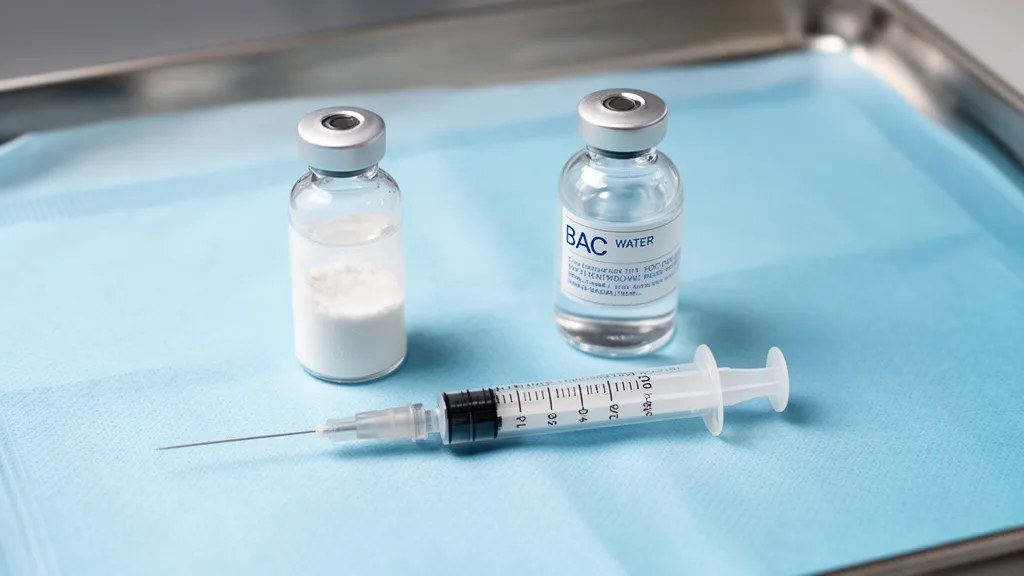
You do not need a lab full of equipment to reconstitute a peptide correctly, but you do need the basics laid out before you start. At minimum that means the lyophilized vial, the solvent you actually intend to use, alcohol pads, sterile syringes, and a clean workspace with enough light to see what you are doing. Gloves, a sharps container, and a nearby calculator are not what make the process sterile, but they do make the workflow more controlled and less error-prone.
The reason this matters is simple: reconstitution mistakes rarely come from advanced chemistry. They come from rushing, improvising, or discovering halfway through the process that one required item is missing.
Preparation Steps
1. Create a Sterile Environment
Before starting, wash your hands, wipe the workspace, lay out the supplies, and reduce obvious airflow if the room setup allows it. The purpose is not to create a pharmaceutical clean room. The purpose is to remove the most common contamination routes from a small home workflow before the vial is ever opened.
2. Bring to Room Temperature
Many users find it easier to handle the vial and solvent after they have sat at room temperature briefly. That step can reduce condensation and make the liquid easier to manage, but it should be understood as a practical workflow choice, not as a universal peptide-specific requirement. The key point is consistency and calm handling, not ritualizing every small step as if it were a hard rule.
Reconstitution Process
Step 1: Calculate Volume
Before the solvent touches the powder, decide what concentration you actually want. For example, if a 5 mg vial needs to deliver 250 mcg in a readable way, mixing to 2.5 mg/mL places that amount at 10 units on a U-100 syringe. That means adding 2 mL of liquid. The point is not that 2 mL is always correct. The point is that the right answer comes from the concentration you want to work with, not from habit alone.
Use our Peptide Calculator for instant calculations.
If you want a fast reference before running custom math, keep the mcg to units converter, the syringe dosing chart, or the printable peptide dosing cheat sheet open alongside this guide.
Step 2: Prep the Vials
Remove the protective caps, swab both stoppers, and let the alcohol dry fully before proceeding. That short pause matters more than many people realize. Wet alcohol still sitting on the stopper is not the goal; a cleaned and dried puncture surface is.
Step 3: Draw Bacteriostatic Water
Draw the required volume slowly, equalizing pressure as needed and clearing obvious bubbles before moving on. This is not the stage to rush. Fast handling here often creates nuisance problems that look dramatic later, even when the peptide itself was fine.
Step 4: Add Water to Peptide
This is the part people most often reduce to a slogan: “aim for the wall, do not shake.” The underlying idea is straightforward. Gentle addition reduces local turbulence, reduces foaming, and gives the powder a better chance to dissolve without unnecessary stress. Direct peptide-specific comparison data is limited, but gentle addition is still the conservative handling approach. If foam appears, let the vial rest instead of trying to force the process faster.
Step 5: Mix Gently
Once the solvent is added, mix with patience rather than force. A gentle swirl is usually enough. What you want is a clear final solution, not proof that you can finish the whole process in thirty seconds. Slight temporary cloudiness immediately after mixing can happen, but persistent cloudiness, particles, or unexpected color change belong in the discard conversation, not in the “probably fine” conversation.
Step 6: Inspect the Solution
Before first use, inspect the vial the same way you would inspect it later in storage: clarity, particles, and appearance all matter. A clear solution does not prove full potency, but visible changes are still meaningful warning signs. If the vial is cloudy, discolored, or visibly contaminated, that is a stronger discard signal than any calendar estimate.
Post-Reconstitution Storage
Immediate Actions
Label the vial immediately with the peptide name, the concentration, and the reconstitution date, then store it in the refrigerator and log it in the Multi-Vial Dashboard. This is where a careful setup becomes an organized workflow instead of a memory test two weeks later.
Storage Guidelines
Refrigeration is the default for most reconstituted workflows. Freezing needs peptide-specific caution because many compounds are not freeze-safe once in solution, and room temperature should be treated as an exception rather than the normal storage state. The exact usable window still depends on the peptide, the solvent, and the handling quality, which is why the calculator and peptide-specific pages matter more than any one generic number.
Common Mistakes to Avoid
Most preventable mistakes are boring rather than technical. Shaking instead of swirling, using too little liquid for a readable draw, rushing through stopper prep, forgetting to label the vial, or working from old solvent are all much more common than exotic chemistry failures. The consistent fix is slower handling and cleaner documentation, not a more elaborate ritual.
Dosing After Reconstitution
First Dose Guidelines
Before the first draw, let the vial settle if it was recently mixed, use a fresh sterile syringe, re-swab the stopper, and draw slowly enough to avoid turning the solution into an air-bubble problem you then have to correct.
Syringe Size Selection
Syringe size should follow readability. A 100-unit syringe is the common default, but smaller syringes can make low-volume draws easier to read and repeat. The right choice depends on the actual unit mark created by the concentration, not on a one-size-fits-all rule.
Use our Peptide Calculator to determine exact units to draw.
Troubleshooting
Solution is Cloudy
Persistent cloudiness usually points to instability, contamination, or an incompatible setup. It is not something to rescue by shaking harder. If the appearance does not normalize after brief rest, discard and restart with fresh materials.
Powder Won’t Dissolve
If the powder is slow to dissolve, pause before assuming failure. Temperature, concentration, and patience all matter. Let the vial warm slightly if needed, reassess the liquid volume, and avoid escalating the problem through aggressive mixing.
Foam Formation
Foam usually reflects handling speed more than peptide chemistry. The correct response is rest, not more agitation.
Safety Reminders
Never reuse syringes or needles, discard sharps correctly, keep the vial out of reach of children or pets, refrigerate after reconstitution, and track the storage window with the calculator. Those habits do more for overall handling quality than any amount of forum folklore.
Injection safety guidance: CDC Injection Safety — Clinical Guidance for Healthcare Providers. Solvent selection: DailyMed — Bacteriostatic Water for Injection (0.9% benzyl alcohol, multi-dose). 21 CFR §610.15 — preservative requirements for biologics.
Conclusion
Proper reconstitution is less about secret technique and more about disciplined basics: clean setup, correct concentration planning, gentle mixing, and immediate labeling. Get those steps right and the rest of the workflow becomes much easier to manage.
Once reconstituted, use our tools to track potency decay and calculate precise doses:
- Potency Decay Calculator - Track degradation over time
- Multi-Vial Dashboard - Manage multiple peptides
- Peptide Calculator - Calculate exact syringe units
Next Steps: