Setting Up a Home Peptide Storage System: Complete Guide
Build an organized, safe, and efficient peptide storage system at home. Includes equipment checklist, labeling strategies, and safety protocols.
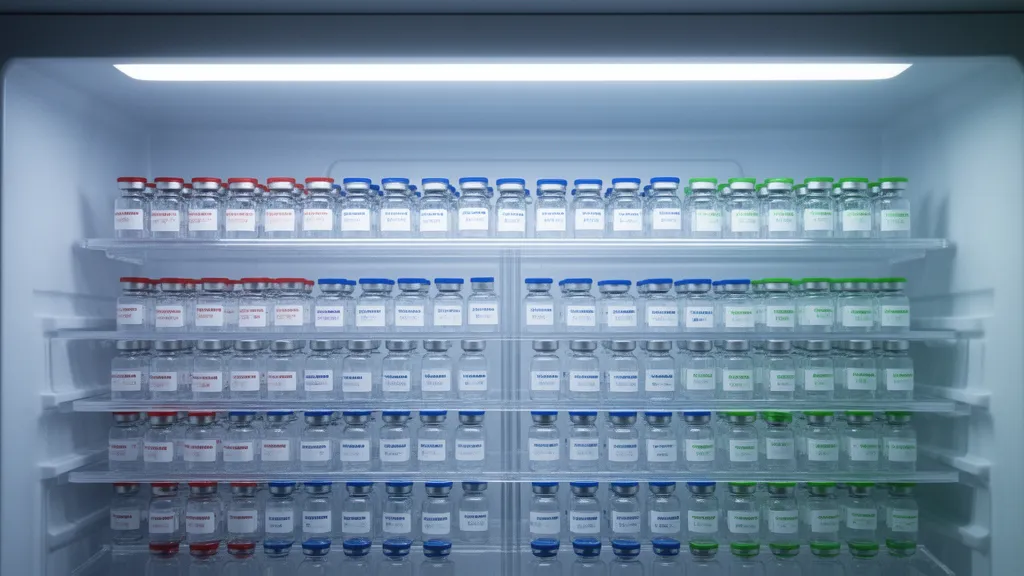
Whether you’re managing 2 vials or 20, an organized storage system reduces mix-ups, keeps potency tracking visible, and makes good handling easier to repeat. The point is not to turn a refrigerator shelf into a laboratory. The point is to remove the predictable errors that happen when vials are unlabeled, loosely stored, and managed from memory.
Why Organization Matters
Without a system, the same problems appear over and over: forgotten reconstitution dates, similar-looking vials that get confused, expiration windows that disappear from attention, and sloppy handling that becomes more likely simply because the workflow is cluttered. A basic system does not need to be elaborate. It just needs to make the important information visible before a mistake has already happened.
Equipment Checklist
The core equipment is simple: a container that fits cleanly inside the fridge, labeling supplies that do not smear or fade, a thermometer that lets you see whether the storage range is actually stable, and some way to keep vials upright instead of rolling around in a drawer or on a shelf. For tracking, a notebook works, but the Dashboard is usually the cleaner option because it keeps dates, notes, and potency context in one place.
A dedicated mini fridge is optional rather than mandatory. It becomes more useful when the number of active vials grows, when shared-household access is a concern, or when the main kitchen fridge fluctuates enough to make temperature control inconsistent.
The Labeling System
Every vial should carry, at minimum, the peptide name, the reconstitution date, and the final concentration. Those three pieces of information solve most of the obvious mix-up problems. An expiration estimate, storage method, and solvent type make the label more useful. Nicknames, batch numbers, or source notes are optional, but they become more valuable as the number of vials increases.
Label example
BPC-157
Recon: 01/15/24
2.5mg/ml (5mg/2ml)
Expires: ~02/15/24
Fridge | BAC
Color coding can help, but only if it stays simple. Some people code by peptide family. Others code by priority, so the oldest or most urgent vial is visually obvious. Either approach works if it reduces confusion instead of becoming another organizational system that needs its own explanation.
Physical Storage Setup
The best fridge location is usually a stable middle-shelf zone away from the door and away from direct vent blasts. Door shelves fluctuate too much, and the warmest or coldest edge areas create extra stress without any benefit. The goal is boring stability, not convenient visibility for casual access.
Organizer Layout
If the organizer has sections, the useful split is usually active vials, backup vials, accessories, and a small quarantine/check area for anything that needs a second look. That structure helps because it prevents questionable vials from staying mixed in with everything else while still waiting for a decision.
The Dashboard System
Digital Tracking (Recommended)
The Multi-Vial Dashboard is the easiest way to keep all active vials in one place without recalculating or relabeling everything manually. Its real advantage is not just automation. It is that the storage timeline stays visible enough to guide action before the user is already guessing which vial is oldest.
Physical Log (Backup)
If you prefer a physical log, keep it sparse enough that it actually gets used. Peptide name, reconstitution date, storage location, and current status are enough to make a paper backup worthwhile.
Log Book Template:
Vial Log - January 2024

BPC-157 Vial #1
Recon: 01/05/24
Location: Fridge, back left
Notes: Clear, 500mcg/day protocol
Status: ✓ Active

Semaglutide Vial #1
Recon: 01/10/24
Location: Fridge, back right
Notes: 0.25mg weekly
Status: ✓ Active
Safety Protocols
Rule #1: Sterile Technique Always
Before accessing any vial, wash hands, swab the stopper, let the alcohol dry, and use a fresh sterile syringe. Gloves can help, but the larger point is consistent clean handling rather than ritualized overkill.
Rule #2: Never Share Syringes
One syringe, one use, one time. Even between your own vials, reusing or cross-using syringes adds contamination risk for no real gain.
Rule #3: Sharps Disposal
Sharps handling should stay boring and strict: no regular trash, no careless recapping, and no leaving used sharps where someone else can encounter them unexpectedly.
Rule #4: Weekly Inspection
The weekly inspection habit matters more than the exact day you choose. A quick scheduled check keeps appearance changes, temperature drift, and supply gaps from becoming invisible until they have already caused a problem.
Temperature Management
Monitoring
A daily glance at the thermometer and a weekly record of the temperature range are usually enough to catch obvious storage drift. The practical target remains the refrigerated range inside the broader 2–8°C pharmaceutical standard described in ICH Q1A(R2). If the range keeps drifting, move the storage location or upgrade the hardware rather than pretending the readings do not matter.
Power Outage Protocol
For outages or temperature events, the main rule is documentation. Keep the fridge closed when possible, check the real temperature when power returns, and treat meaningful warming as an exposure event to review rather than as a detail to forget because the vials still look normal.
Rotation Strategy: FIFO
First in, first out is still the easiest default because older vials are usually the ones drifting closest to their discard boundary. The main exception is a workflow that includes especially handling-sensitive peptides such as GLP-1s, where physical fragility may matter even when the model still shows high potency.
Multi-User Household Management
In a shared household, the simplest fix is a clearly labeled dedicated container placed in a stable fridge zone. If privacy or access is still a concern, a mini fridge in a private space becomes more attractive. The real goal is not secrecy for its own sake. It is preventing accidental handling and unnecessary temperature disruption.
Travel/Portability
For short trips, an insulated cold-storage setup with temperature monitoring is usually enough. For longer travel, the more conservative answer is still to avoid unnecessary transport of reconstituted vials when a stable refrigerated setup at home is available. If travel is unavoidable, treat it as an added handling variable rather than assuming the ordinary storage window remains untouched.
Scaling Up: Managing 10+ Vials
Once the vial count climbs above ten, organization stops being a convenience and becomes a basic control measure. This is where digital tracking, clear physical zoning, and batch labeling stop feeling optional.
Inventory Management
Restock Triggers
Inventory control is easier if restocking begins before urgency. Two weeks of remaining active supply is a reasonable warning threshold, and one week is close enough that any delay starts to matter.
Disposal Protocol
Discard decisions should still follow appearance, contamination risk, and storage-age logic rather than a reluctance to waste product. The exact protocol for disposal should stay aligned with safe local practice, with sharps always handled separately from ordinary vial waste.
Cost-Effective Storage
A budget setup usually covers the essentials. A premium setup mostly buys convenience, separation, and better control. Either can be justified if it prevents even one avoidable loss or recurring storage error.
Checklist: Weekly Maintenance
The weekly routine should remain short enough to keep doing: inspect the vials, update the dashboard or log, check the temperature record, remove anything suspicious, and make sure supplies are still sufficient for the next week.
Common Setup Mistakes
The most common storage mistakes are still the simple ones: loose vials, no temperature monitoring, fading labels, mixed storage with everyday food clutter, and no real tracking system. The fix is not more theory. It is cleaner execution.
Conclusion
A proper storage system is valuable because it turns recurring judgment calls into a repeatable routine. Set up the physical container, label the active vials, make the tracking visible, and keep the weekly maintenance light enough that it actually happens.
Related Tools:
- Multi-Vial Dashboard - Digital tracking system
- Potency Calculator - Calculate expiration dates
- Peptide Database - Storage requirements for each peptide
Next Steps: Read our visual inspection guide to learn what to look for during weekly checks.
Recommended gear
PeptideClock may earn a commission from qualifying purchases via links on this page, at no additional cost to you. Product links are general lab and handling equipment, not medical advice — See our disclaimer.
Thermoelectric · AC/DC/USB
Cooluli 4 L Mini Fridge
A compact 4-liter thermoelectric fridge — a common way to keep reconstituted vials in a dedicated cold space away from a busy kitchen fridge. Runs on AC, 12V DC, and USB.
View on Amazon