Reconstituted Peptide Shelf-Life Guide
How to think about reconstituted peptide shelf life without overstating certainty when peptide-specific assay data is limited.

A reconstituted peptide shelf-life claim is only as strong as the evidence supporting it. That sounds obvious, but this is where a lot of peptide content collapses into overconfidence. For a few approved products, the storage window is label-backed. For most research-vial workflows, shelf-life language remains a conservative estimate built from chemistry, handling quality, temperature exposure, and contamination risk rather than a direct measured assay of that exact setup.
What shelf life actually means after reconstitution
Once liquid is added, two questions start running at the same time. One is chemical stability in solution. The other is microbiological risk from repeated vial access. That is why a vial can still look clear and yet be a poor keep-or-use decision if it has been mishandled, repeatedly warmed, or entered under poor sterile conditions.
This is also why shelf life should never be treated as a single magical number that overrides everything else. A calendar estimate is only one part of the decision. The handling history matters too.
Why approved-product windows cannot simply be copied into research-vial workflows
Semaglutide and tirzepatide labels are useful because they provide stronger handling instructions for specific approved formulations. But those facts apply to those products, not automatically to every reconstituted research vial carrying the same active name. Formulation, solvent choice, preservative support, and access pattern can all change the real-world storage context.
That is why PeptideClock keeps reminding readers to separate label-backed product facts from research-vial extrapolation. The storage window for a validated pen is not interchangeable with the storage window for a lyophilized vial mixed in BAC water and punctured repeatedly on a home schedule.
The conservative way to think about shelf life
A practical workflow asks four questions in order. What is known from labels or direct studies? What is being estimated from general stability science? What contamination risks were introduced after reconstitution? And what temperature events occurred after the vial was mixed? That is the logic behind using the dashboard and the stability research cluster together instead of leaning on one isolated number.
What shelf-life estimates do not replace
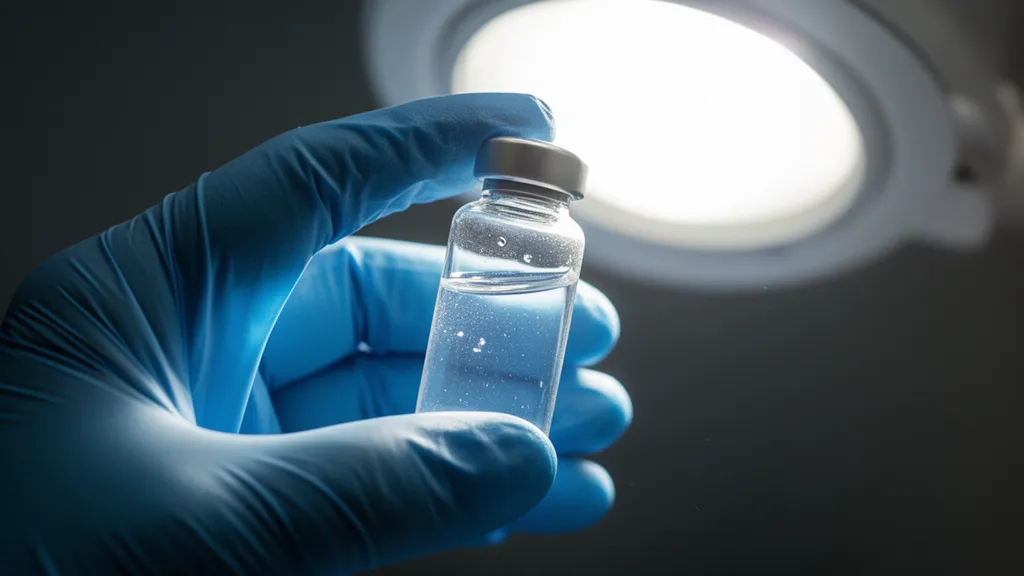
Shelf-life estimates do not replace discard criteria. If a vial becomes cloudy, develops particles, changes color, or has an uncertain contamination history, that is a stronger warning sign than the calendar alone. The clock matters, but it does not outrank an obvious quality failure.
If you need the practical handling side, the Peptide storage guidelines and the Peptide storage complete guide are the better operational companions. If the question is whether a visually changed vial should still be used, Cloudy peptide solution: when to discard is the more relevant page.
Related reading
- Storage temperature FAQ
- Peptide storage guidelines
- Cloudy peptide solution: when to discard
- Peptide storage complete guide
References & evidence
- ICH Q1A(R2) — source for general stability-testing framework.
- ICH Q5C — source for biologic-product stability context.
- DailyMed bacteriostatic water — source for BAC water preservative support.
- CDC injection safety guidance — source for multi-dose vial handling context.