Cloudy Peptide Solution: When to Discard
How to interpret cloudiness, particles, color changes, and uncertain handling history when deciding whether a peptide vial should be discarded.
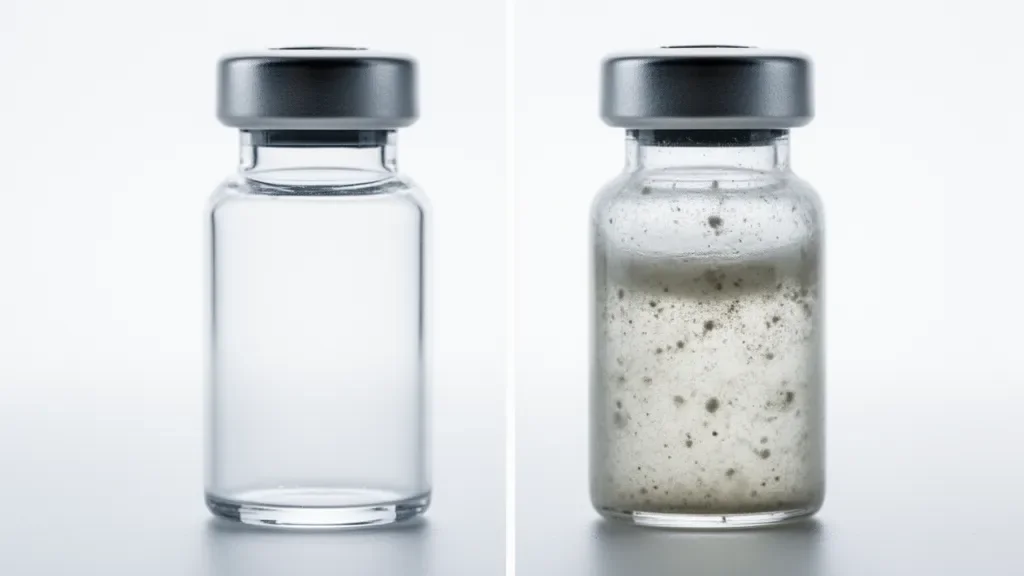
A vial does not need to look dramatic to deserve disposal. In routine peptide handling, new cloudiness, visible particles, unexpected color change, stopper damage, or an uncertain contamination history are often more actionable than a model-based calendar estimate. That is because visual failure and calendar-based potency decline are related, but they are not the same signal.
Why visual inspection matters
Visual inspection is one of the few real-time checks available in everyday storage. It cannot confirm potency, identity, or sterility. What it can do is reveal obvious quality failures and contamination risk that should override any urge to “wait and see.” If the vial looks wrong, the burden of proof should not shift to the user to rationalize why it might still be acceptable.
Clear does not mean perfect, but changed appearance matters
A clear solution can still lose potency over time, which is why shelf-life tracking and visual inspection need to stay separate. But the reverse is also important: once the appearance changes unexpectedly, that signal deserves more weight than a reassuring potency estimate from a calculator. The safe rule is straightforward. If appearance changes unexpectedly, discard. If appearance remains clear, continue using the normal storage timeline and evidence base rather than assuming perfect stability.
What should move a vial into the discard category
New cloudiness, visible particles or precipitate, a meaningful color shift, stopper or seal compromise, and any vial with uncertain handling or contamination history all belong in the discard conversation. The exact mechanism does not always have to be proven first. The practical problem is that once those red flags appear, the risk profile has changed more than the calculator can meaningfully capture.
If you need the broader timeline discussion, the Reconstituted peptide shelf-life guide covers calendar-based decay and handling windows. If the question is overall storage discipline, the Peptide storage guidelines and Storage temperature FAQ are the better companions. For active-vial organization, the Dashboard remains the easiest way to keep dates and notes visible.
For the consolidated visual-discard reference, use the Visual Inspection Guide: When to Discard Reconstituted Peptides. The two pages remain separate until page-filtered ownership evidence supports any redirect or canonical decision.
Related reading
References & evidence
- CDC injection safety guidance — source for contamination-prevention and vial-handling context.
- ICH Q5C — source for biologic stability framing.