Insulin Syringe Dead Space and Small-Volume Peptide Math
Understand syringe dead space, the ISO 8537 measurement method, and why a fixed residual volume is a larger fraction of a smaller U-100 draw.
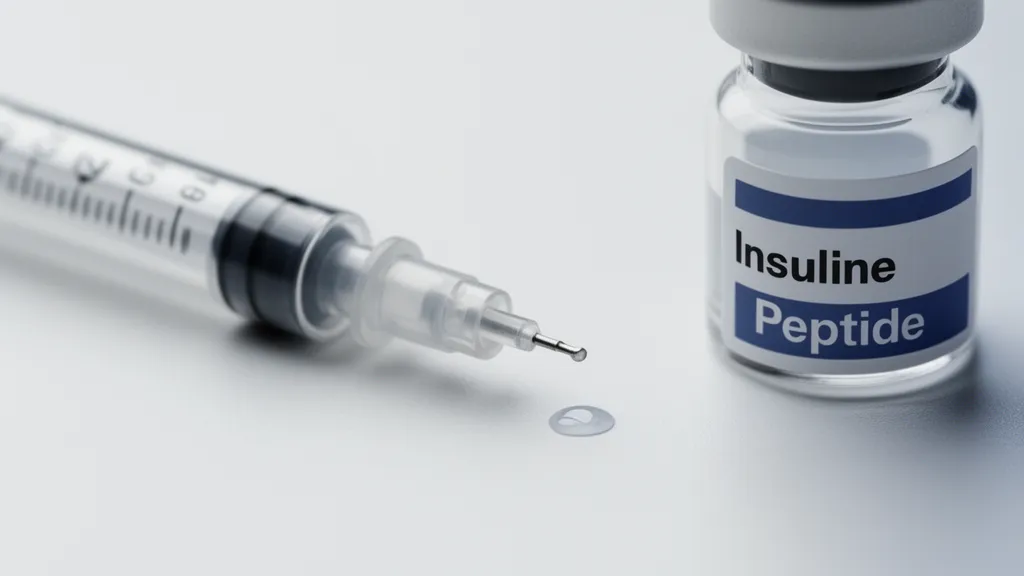
Dead space is the fluid volume that can remain in a syringe or needle path after the plunger is fully depressed. For small-volume peptide math, the useful question is not “what is the universal dead-space number?” but “how was this syringe measured, and how large is the residual volume relative to the draw being considered?”
This is a volume-and-measurement reference, not a dosing or injection recommendation.
What dead space means
Dead space describes the residual internal volume in the syringe system. ISO 8537 includes a normative annex titled “Test method for determination of dead space.” (ISO 8537:2016 preview)
The standard’s measurement method is more useful than an unsourced universal value because dead space is a property of a particular syringe-and-needle configuration. This page does not assign a microliter value to a brand or model that has not been measured in the evidence package.
Why the relative effect grows as the draw shrinks
U-100 is a volume scale calibrated at 100 units per mL. (ISO 8537:2007; see also the PeptideClock calculator rule)
For a fixed residual volume, the simple relative-error relationship is:
relative effect = dead-space volume ÷ draw volumeBoth quantities are volumes, so the ratio is dimensionless. If the dead-space volume stays fixed while the draw becomes smaller, the residual volume represents a larger fraction of that draw. This is arithmetic about volume proportions, not a claim that a specific syringe loses a fixed percentage of a peptide dose.
A measurement worksheet
| Record | Why it matters | Limit |
|---|---|---|
| Syringe and needle configuration | Dead space belongs to the complete syringe system being examined | Do not transfer a result to an unmeasured configuration |
| Nominal barrel scale | Establishes the volume scale used for the calculation | A U-100 mark is a volume reference, not peptide mass or a recommended target |
| Dead-space test method | Makes the measurement reproducible and auditable; ISO 8537 specifies a test method | The standard’s existence does not supply a value for every model |
| Measured or documented residual volume | Provides the numerator for a relative-volume calculation | Do not invent a value when the configuration has not been measured |
| Draw volume | Provides the denominator for the relative-volume calculation | Smaller draws make a fixed residual volume a larger fraction; this does not quantify clinical impact |
The worksheet’s job is to keep device facts, measured values, and arithmetic separate. It is not a ranking of syringe brands and does not establish that one device is more accurate, repeatable, or suitable for human use than another.
Keep U-100 markings in their lane
ISO 8537 describes syringes for U-40 and U-100 insulin concentrations; the U-100 designation is the 100-units-per-mL scale. In PeptideClock’s calculation model, the unit divisor is also 100 units per mL. Marked units therefore provide a volume conversion. They do not automatically provide peptide mass, international units, potency, or a target amount.
For the scale relationship, use the U-100 insulin syringe reference. For concentration and target-amount arithmetic, see Concentration vs dose errors and the Peptide Calculator. Those tools keep the concentration assumption visible; dead-space discussion cannot replace it.
What this evidence does not establish
The sources support a definition, a standards-based test-method reference, and the arithmetic of relative volume. They do not support a universal dead-space value, a brand comparison, a fixed percentage loss, or a clinical conclusion about a particular draw. They also do not turn a volume marking into a peptide dose.
If a measurement is important to a study, record the exact syringe configuration, method, observed value, and limitations. If the configuration or method is unknown, state that uncertainty instead of filling it with a generic number.
Bottom line
Dead space is a measurable residual volume, not a universal percentage. ISO 8537 provides a dead-space test-method reference, U-100 provides a 100-units-per-mL volume scale, and the ratio of a fixed residual volume to the draw grows as the draw shrinks. Keep those three facts separate from concentration, peptide identity, and any clinical or dosing conclusion.
For research-only context and site boundaries, see the PeptideClock disclaimer.
References & Evidence
- ISO 8537:2016 sample PDF — Annex D identifies the normative test method for determination of syringe dead space.
- ISO 8537:2007 — standard scope covering U-40 and U-100 insulin syringes; U-100 is the 100-units-per-mL scale used in the site’s volume math.
- PeptideClock calculation model —
docs/calculator.mdandsrc/utils/peptideCalculator.ts— site rule using 100 units per mL for U-100 volume conversion.