BPC-157 Dosing Calculator Guide
Conservative BPC-157 concentration examples, mcg-to-units math, and clear guidance on what the chemistry literature does and does not prove.
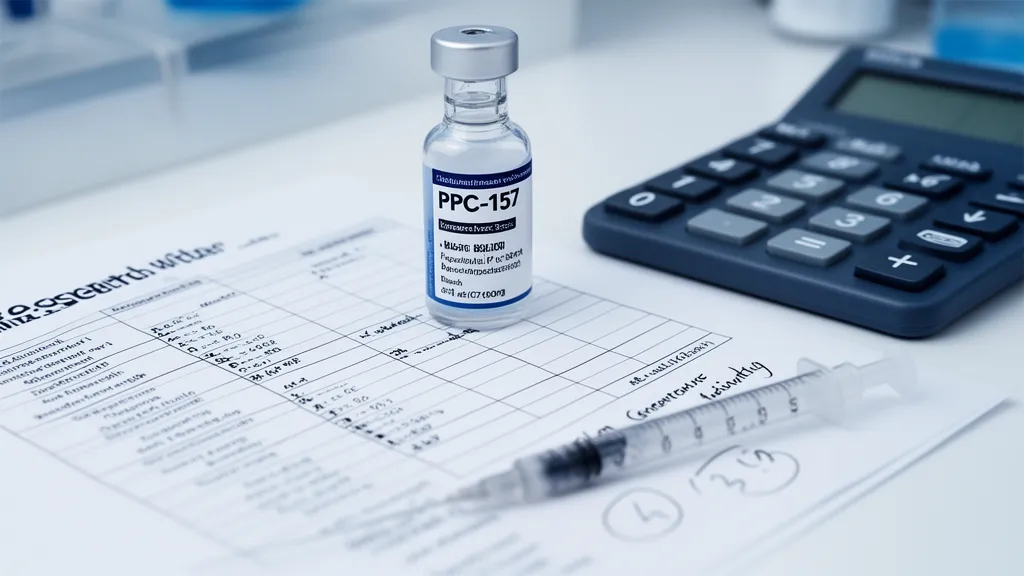
BPC-157 questions are often framed as dosing questions, but most of them are really concentration and syringe-reading questions in disguise. The peptide name gets the attention, yet the conversion still depends on the same underlying chain as every other vial: amount in the vial, liquid added, resulting concentration, then unit conversion.
A simple example makes the logic clearer
If a 5 mg vial is reconstituted with 2 mL, the final concentration is 2.5 mg/mL. Because one U-100 unit equals 0.01 mL, each unit contains 0.025 mg, or 25 mcg. That places 250 mcg at 10 units and 500 mcg at 20 units.
The important point is not the memorized result. It is that the result exists only because the concentration is fixed. Change the added volume and the unit marks change with it. That is why BPC-157 charts are really concentration charts, not universal dosing maps.
Why BPC-157 gets described as more chemically robust
The literature often refers to BPC-157 as a stable gastric pentadecapeptide, which is one reason it is frequently discussed as a relatively robust peptide compared with more fragile solution-phase compounds (PMID 21548867). That supports a general impression of chemical resilience, but it does not automatically answer the storage question people usually care about.
Gastric stability and reconstituted-vial stability are different problems. One tells you something about how the molecule behaves in a harsh digestive environment. The other asks how a repeatedly accessed liquid vial behaves over time in refrigeration, under real handling conditions. Those evidence layers should not be collapsed into one another.
What the calculator is actually for
On PeptideClock, BPC-157 examples exist so users can verify math and decide whether the final syringe mark will be readable. They are not meant to imply a universally agreed protocol or a fixed shelf-life promise. The safest workflow is still to confirm the vial amount, confirm the added volume, calculate concentration, then convert the target mcg amount into units only after those earlier numbers are locked in.
If the final answer lands in a tiny unit range, the fix is usually to adjust concentration or use a better-matched syringe rather than to accept a hard-to-read draw. That is why the Peptide Calculator FAQ and the U-100 syringe reference matter just as much here as the peptide-specific examples.
Related reading
References & evidence
- Stable gastric pentadecapeptide BPC-157 review — source for the gastric-stability context.
- DailyMed bacteriostatic water — source for BAC water preservative support.
- CDC injection safety guidance — source for sterile multi-dose handling context.
- FDA insulin syringe standard — source for U-100 conversion math.