Benzyl Alcohol in BAC Water
What benzyl alcohol does in bacteriostatic water, why it matters for multi-dose workflows, and what it does not guarantee.
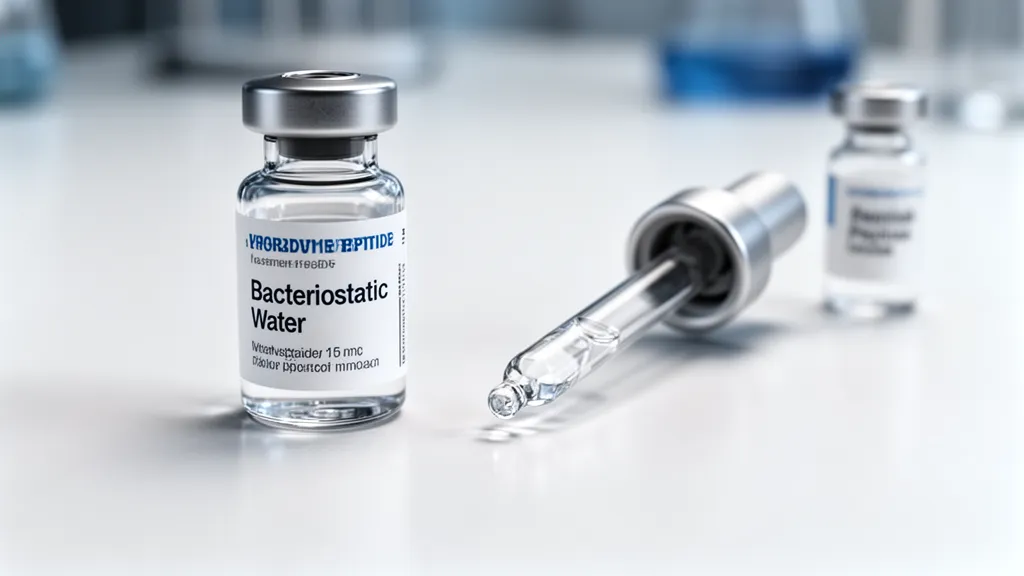
BAC water is discussed constantly in peptide workflows because it contains benzyl alcohol, and benzyl alcohol is the part that makes the solution bacteriostatic rather than plain sterile water. That sounds simple, but the conclusion people draw from it is often too broad. Benzyl alcohol matters, yet it does not do as much as casual peptide advice often claims.
What benzyl alcohol actually contributes
According to DailyMed, bacteriostatic water for injection contains 0.9% benzyl alcohol. In practical terms, that means the solvent is designed for multi-dose handling in a way that plain non-preserved water is not. When a vial will be punctured repeatedly, that preservative support is one reason BAC water is usually the more conservative choice.
The important limit is that benzyl alcohol supports a better handling environment; it does not turn every workflow into a safe one. If technique is poor, if a vial is mishandled, or if storage is inconsistent, the presence of benzyl alcohol does not erase that problem. The CDC’s injection-safety guidance still applies because contamination risk is tied to the full workflow, not only to the liquid in the vial (CDC).
What benzyl alcohol does not prove
This is where a lot of bad content drifts into overclaiming. Benzyl alcohol does not prove that every peptide automatically stays stable for the same number of days. It does not mean a vial can be kept indefinitely once reconstituted. It does not make refrigeration optional. And it definitely does not convert sloppy repeated access into good technique.
That distinction matters because BAC water gets invoked in two different conversations at once. One is the contamination-risk conversation, where preservative support is genuinely relevant. The other is the chemical-stability conversation, where peptide-specific assay data is usually much thinner. PeptideClock tries to keep those two conversations separate instead of pretending one ingredient answers both.
Why PeptideClock keeps the language careful
When PeptideClock favors BAC water over saline in a repeated-access workflow, it is doing so because BAC water is the more conservative multi-dose solvent. That is a workflow choice, not a claim that BAC water universally stabilizes every peptide molecule. If you want the broader model discussion behind that preference, the longer explanation is in BAC water vs saline. If you are still at the concentration-planning stage, how much BAC water to add and the Peptide Calculator are the better next steps.
Related reading
References & evidence
- DailyMed bacteriostatic water — source for composition and preservative content.
- CDC injection safety guidance — source for handling and contamination-prevention context.